We approached
Lisbon from the south, leaving the hills of cork forests for one last day of cycling a stretch of flat and not-so-inspiring agricultural landscape to the town of Montijo. We were accompanied by a steady stream of traffic and trucks of pig manure...you can't see it but you know it's there. From Montijo it was a short and cheap ferry ride (3.25 euros apiece, and the bikes for free!) and, boom, we were in the busy transportation hub on the shore in the heart of Lisbon. It was like an ant city, people and cars in constant motion, tourists with cameras everywhere. Such a contrast to the rural country that we passed through in the last few days.
 |
| Cork trees are a variety of oak, and are harvested every nine years. The trees are widely spaced and it is as peaceful as a park, with not much going on other than bark growing. |
 |
| The trees are marked with the last digit of the year it was harvested. Can you see the digit indicating that this tree was stripped just last year? |
 |
| Our first view of Lisbon from the Montijo, across the very wide River Tagus where it flows into the Atlantic Ocean. |
 |
| Making our way along the riverfront on the Lisbon side. |
From a distance Lisbon looks flat, but it really is a jumbled network of winding streets that go up and down steep hills. There are similarities to San Francisco: a big earthquake in 1755 that almost totally destroyed the town, a commanding suspension bridge, and old electric cars to take you up and down those hills.
 |
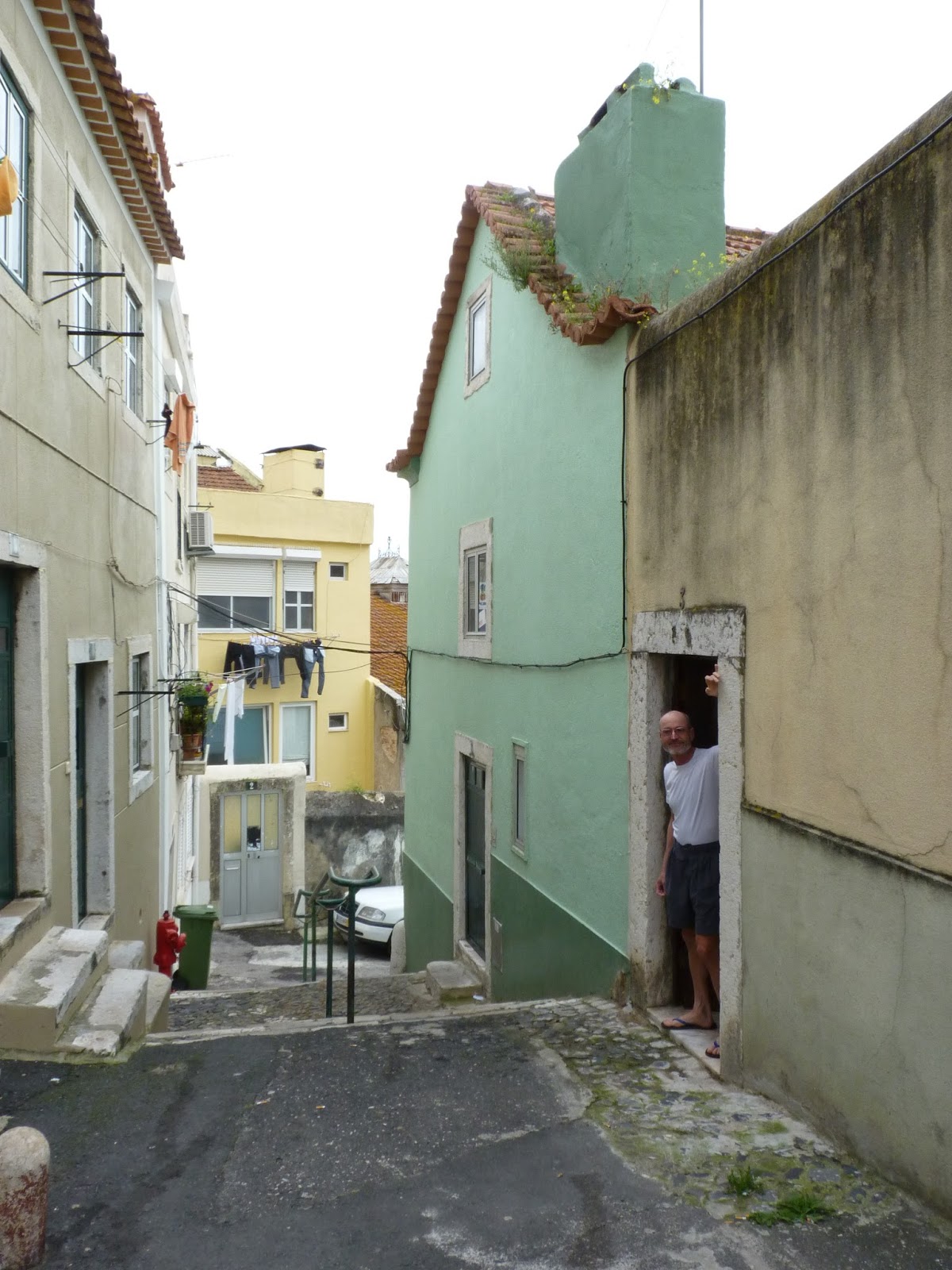
| John peeking out the door of a small flat in the heart of the city through AirBnb, our first experience with the service. It was at the top of an incredibly steep hill that was a grade too intimidating to ride up or down. |
Our first day we visited the
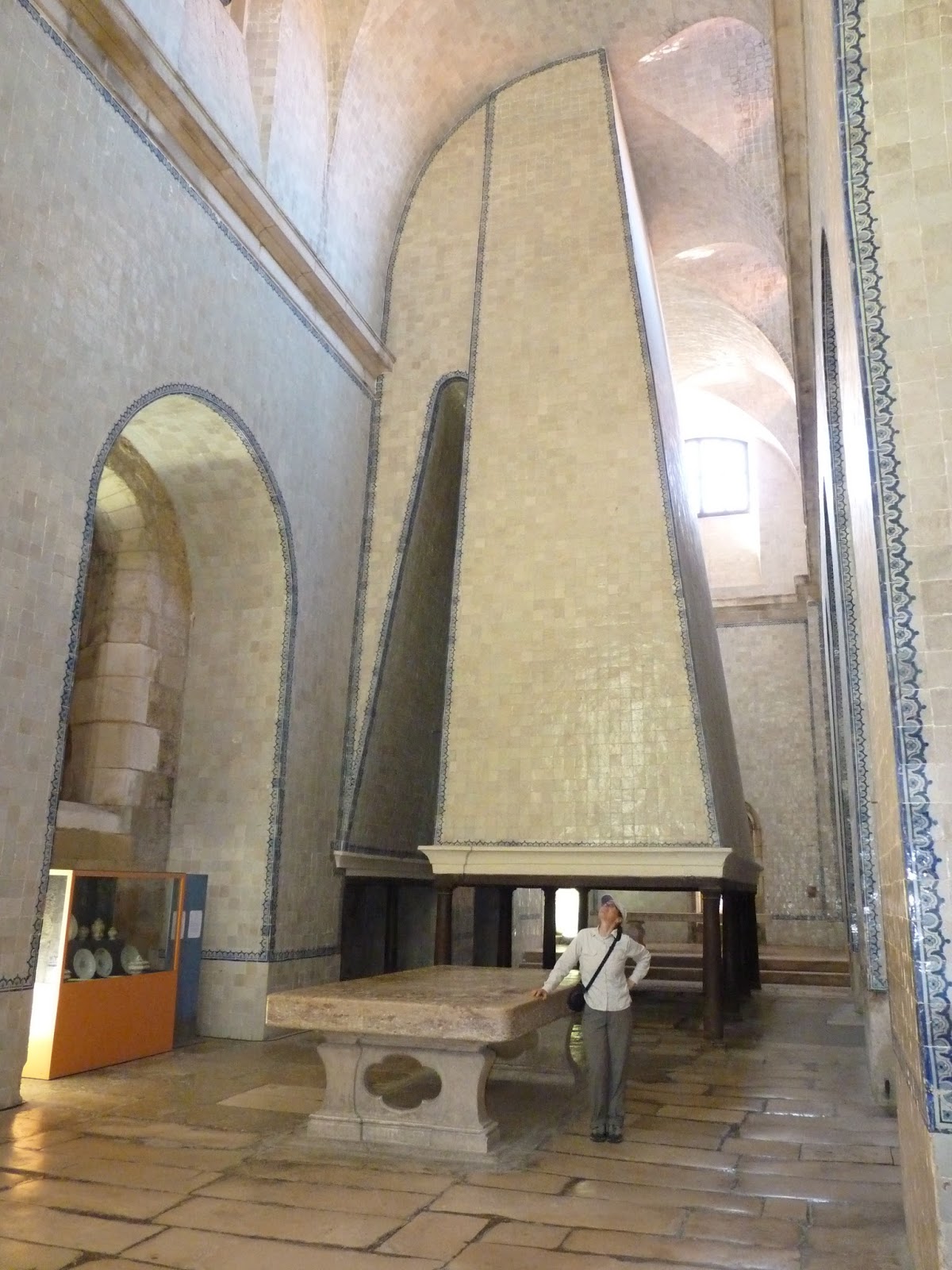
Museu Nacional do Azulejo, which to revealed to us how tile differentiates Portuguese culture. Centuries of evolution of the art were on display, all housed in a converted convent which was a museum in itself. It was a great introduction that shaped our subsequent exploration of the city.
 |
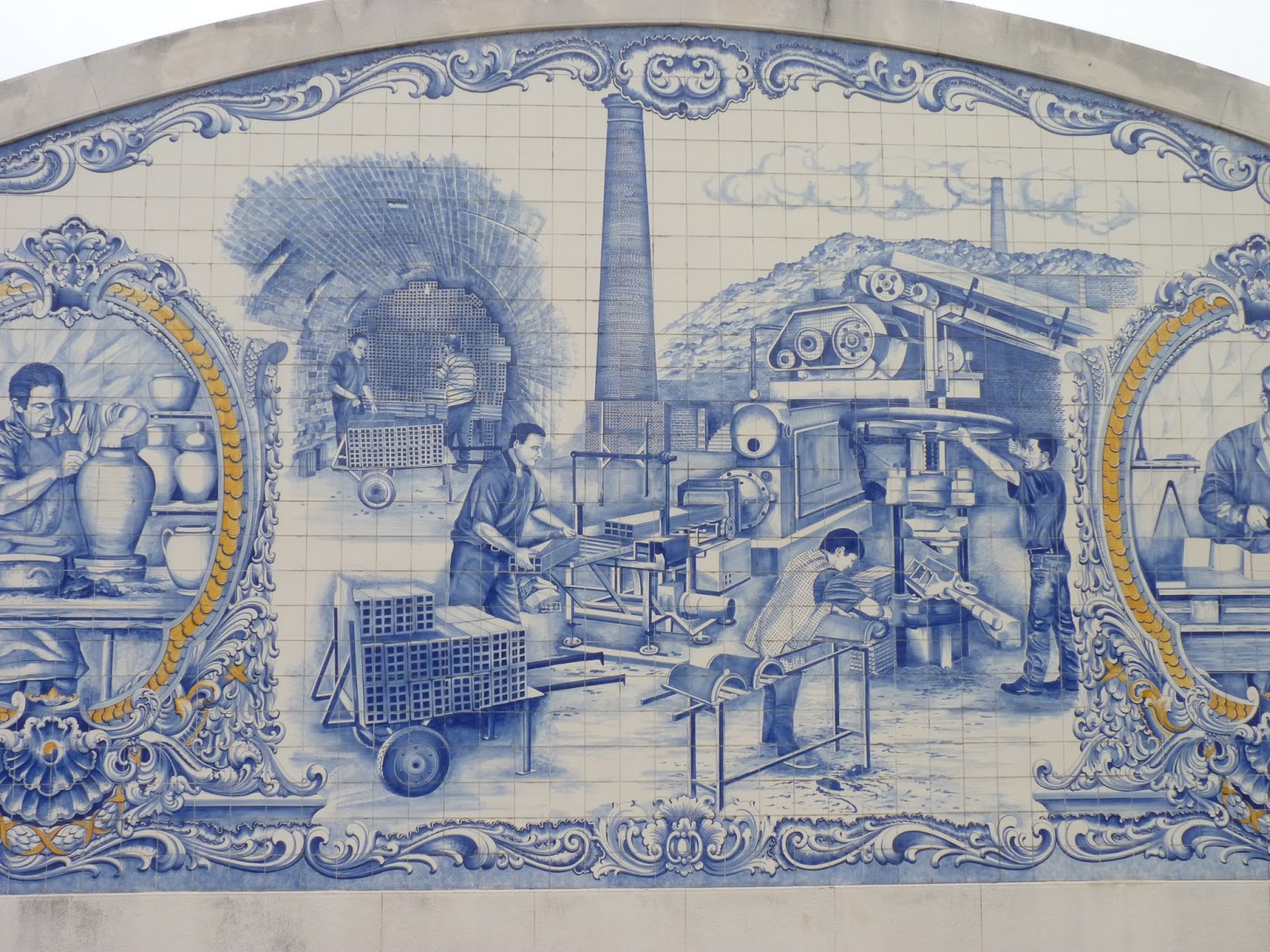
| Insanely beautiful azulejo, which is more than just painted tile. It is cultural identity. |
 |
| Blue and white azulejo developed in the 18th century with pastoral themes painted by professional artists. |
 |
| In the gallery of the cloister of the old convent a space is dedicated to cataloging and restoring old tiles. There are boxes and crates stacked high with tiles and shards waiting to be put back together, a rather overwhelming task. |
 |
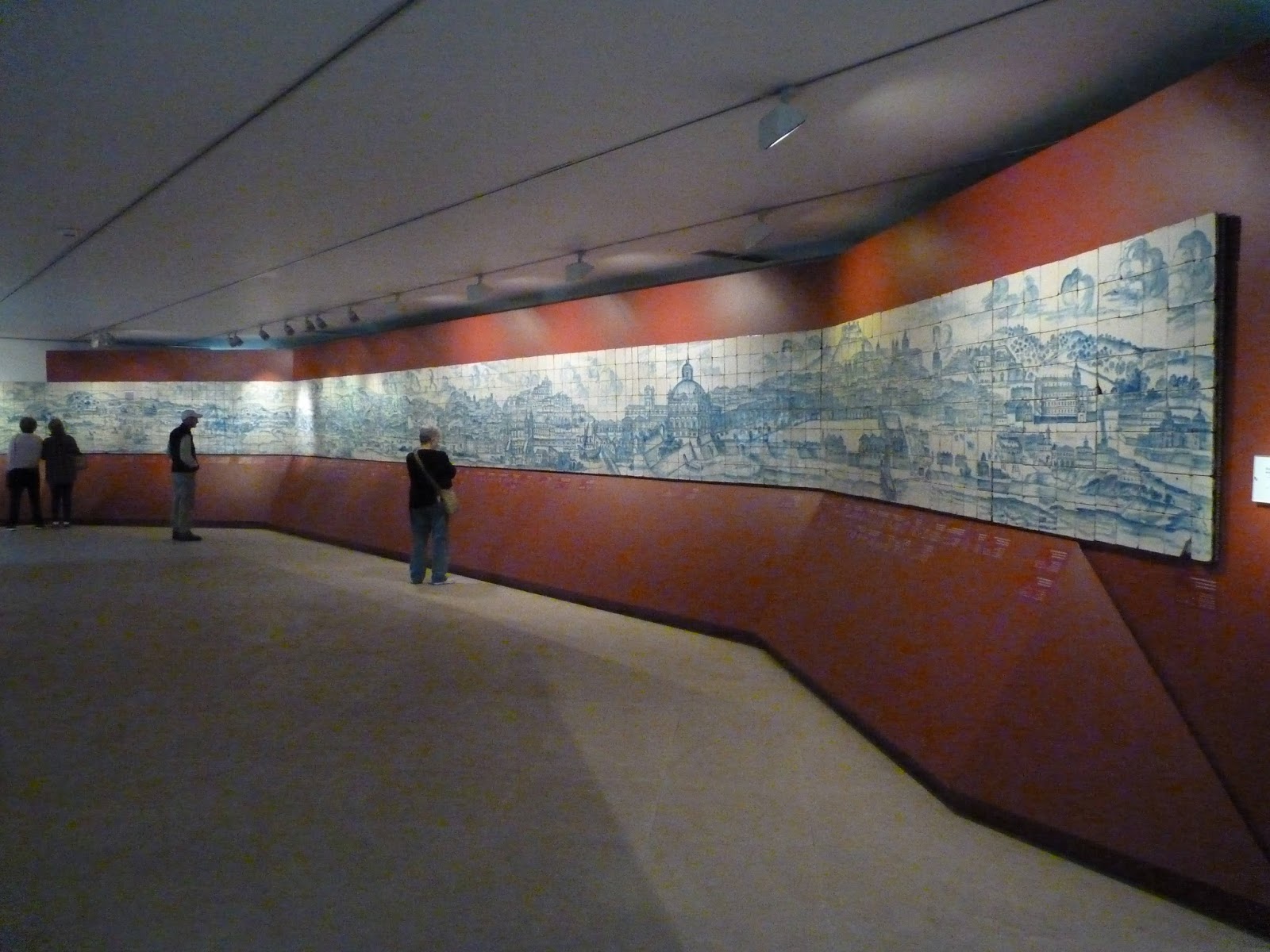
| The most impressive piece was this 36 meter-long mural depicting Lisbon before the 1755 earthquake. |
 |
| Looking west over the rooftops of Lisbon from high in the Alfama district. |
 |
| Hardly space for a pedestrian when a streetcar passes. |
 |
| We rode the streetcar to Belém to visit the Mosteiro dos Jeronimos, a former monastery and now tourist mecca. But deservedly so. |
 |
| The cloister is all sugar-spun ornamentation. |
 |
| And if you look closely you can see carving marks and little men's faces among the flowers. |
 |
| The architectural style of the cloister is Manueline, a Gothic style from the early 16th century unique to Portugal. |
Lisbon is a mature tourist destination. It is a cruise ship port, and
we saw at least five floating hotels docked on one section of shore.
There is a broad walking street leading from the docks into the city
that is cafes and shopping all adapted to the roaming tourist. There
are sightseeing buses, little motorized carts to take you up hills,
restaurateurs handing out menus and nearly pulling you into their
establishment . We found the main center a bit overwhelming and lacking authenticity. But Lisbon is a big city with a bus and subway system, and we
took advantage of that to break out of the touristy core.
Since the beginning of the construction of the subway system in the 1950's, artists have been commissioned to create
azulejo art in each station. So on our second and last afternoon we rode the rails and got off at numerous stations in a scavenger hunt of sorts, looking for azulejos, both old and new.
 |
| Subway azulejos! |
 |
| We saw an aqueduct marked on the tourist map, but we did not have the energy to go down to see the foundation. |
 |
| But we did come across a segment right in the middle of the city next to a lovely little park. |
 |
| And the bonus was azulejo embedded in the foundation. |
 |
| If you understand the meaning of the monkey and these women in this subway station, please explain it to me. |
 |
| We ducked into a hotel lobby and found this wonderful mix of furniture and azulejo and leaded window. |
 |
| Our favorite installation was this station... |
 |
| ...with its modern disjointed interpretations of old azulejo themes. |